
- +91 7381040775 / +91 7381030775
- support@drdiptimanent.com
- Mon - Sun : 10AM- 4PM
- Mon - Fri : 6PM-8PM
- JCEM Diagnostics, Tarini Lane, Near Secondary Board High School, Bajrakabati Rd, Cuttack, Odisha – 753001
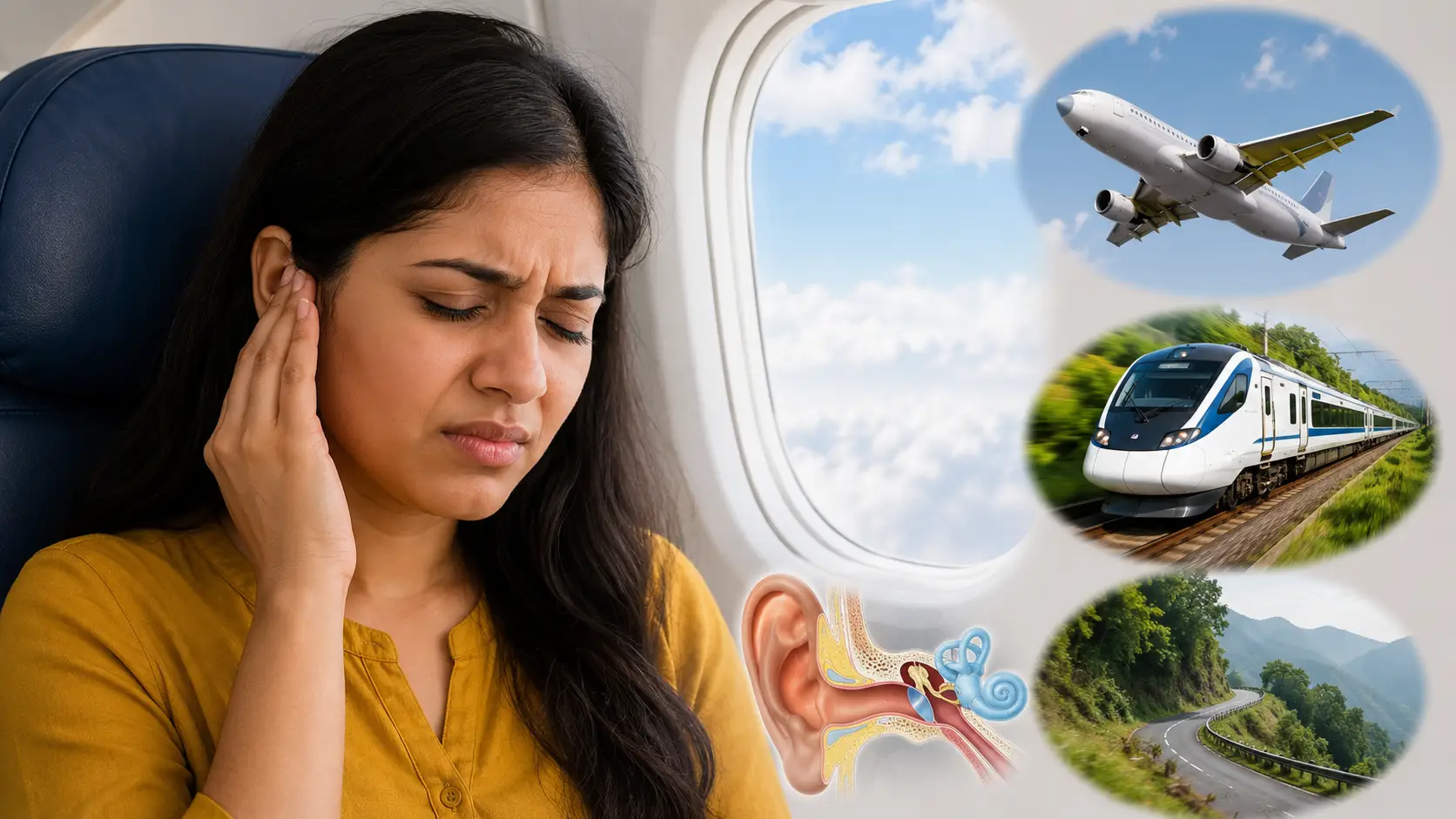
Travelling can be exciting, but that uncomfortable feeling of a blocked or clogged ear can quickly spoil the experience. You may notice ear pressure, muffled hearing, popping sounds, or mild discomfort during a flight, a train journey through changing elevations, or travel to hilly areas.
In most cases, this happens because your ears are trying to adjust to changes in the surrounding air pressure. However, if the blockage is severe, painful, or does not improve, it may need medical attention.
Your middle ear contains air and is connected to the back of your nose by a small passage called the Eustachian tube. This tube helps equalise the air pressure on both sides of your eardrum.
When you travel through areas where air pressure changes quickly, the Eustachian tube may not adjust fast enough. As a result, pressure can build up across the eardrum, making your ear feel blocked.
This is why many people experience:
Air travel is one of the most common situations in which people experience ear blockage. The problem often becomes more noticeable during take-off and especially during landing.
As the aircraft changes altitude, the surrounding air pressure changes rapidly. Therefore, your middle ear needs to equalise its pressure quickly. If the Eustachian tube does not open properly, the eardrum may be pulled inward or outward, causing the familiar blocked-ear sensation.
Yes, they can.
Although ordinary train travel may not cause the same rapid pressure changes as flying, some train journeys involve changes in altitude. For example, travelling through hills, mountains, tunnels, or areas with significant elevation changes may trigger ear pressure in some people.
Therefore, if your ears are already sensitive or your Eustachian tubes are not functioning properly, even a train journey may cause temporary ear blockage or popping.
When travelling to higher altitudes or moving up and down hilly roads, the atmospheric pressure around you gradually changes.
Usually, your Eustachian tubes adjust automatically. However, if they are swollen, blocked, or not opening properly, your ears may struggle to equalise the pressure.
As a result, you may feel that your ears are:
A cold, sinus problem, allergy, or nasal congestion can affect the normal functioning of the Eustachian tube.
When the lining of the nose and surrounding areas becomes swollen, the tube may not open properly. Consequently, pressure equalisation becomes more difficult during travel.
This is why travelling with a severe cold or blocked nose can sometimes make ear pressure more uncomfortable.
Simple techniques can often help your ears equalise pressure naturally.
You may try:
These actions can encourage the Eustachian tube to open and help balance pressure inside the middle ear.
Yes. Children may also experience ear pressure during flights or travel involving altitude changes.
However, young children may not be able to explain what they are feeling clearly. They may become irritable, cry, pull at their ears, or appear uncomfortable.
For infants and young children, swallowing during pressure changes may help. Parents should consult a doctor for individual advice, especially if the child has an ear infection, significant congestion, or recurrent ear problems.
A mild blocked sensation usually improves after the pressure equalises. However, you should consult an ENT specialist if you experience:
These symptoms may indicate that something more than temporary pressure imbalance is involved.
In some cases, a significant pressure difference can cause ear barotrauma, which is an injury to the ear caused by pressure changes.
Symptoms may include more intense pain, hearing changes, ringing, dizziness, or, in uncommon cases, damage to the eardrum.
Therefore, persistent or severe symptoms should not be ignored. An ENT specialist can examine the ear and determine the exact cause of the problem.
An ENT specialist can examine your ear, nose, and throat to identify why you repeatedly experience blocked ears during travel.
The doctor may look for problems such as:
Treatment depends on the underlying cause. Therefore, repeated ear blockage should be evaluated rather than treated repeatedly without knowing the reason.
Consider seeking medical advice before a major journey if you have:
An ENT evaluation can help you understand whether special precautions or treatment may be appropriate for your situation.
A blocked ear after a flight, train journey, or hill travel is often caused by changes in air pressure and temporary difficulty in equalising pressure through the Eustachian tube. Fortunately, the problem is usually temporary and improves as the pressure inside the ear returns to normal.
However, persistent blockage, severe pain, hearing loss, dizziness, or discharge from the ear should be checked by an ENT specialist. Getting the right diagnosis is important because recurring ear blockage may sometimes be linked to an underlying ear or nasal condition.
If you frequently experience ear pressure while travelling, consult an experienced ENT doctor to understand the cause and find the most suitable treatment.
If you are experiencing voice changes, hoarseness, or throat discomfort, it is important not to ignore the symptoms. Proper diagnosis and timely treatment can help protect your voice and improve your quality of life.
Dr. Diptiman – ENT Specialist
📍Clinic: JCEM Diagnostics, Tarini Lane, Near Secondary Board High School, Bajrakabati Rd, Cuttack, Odisha – 753001
📞 Call: 9438436775
📧 Email: support@drdiptimanent.com
🌐 Website: Dr. Diptiman ENT
