- +91 7381040775 / +91 7381030775
- support@drdiptimanent.com
- Monday - Sunday : 10AM- 4PM
- Monday - Friday : 6PM-8PM
- JCEM Diagnostics, Tarini Lane, Near Secondary Board High School, Bajrakabati Rd, Cuttack, Odisha – 753001
Advanced salivary gland treatment plays a key role in managing conditions like blockages and infections. Our approach includes modern techniques such as sialendoscopy, which supports effective salivary stone removal and precise salivary duct surgery to restore normal gland function. With innovations in minimally invasive ENT, patients benefit from safer procedures, reduced discomfort, and faster recovery.
Effective salivary gland treatment is essential for managing conditions such as blockages and infections that affect normal gland function. Many patients require salivary stone removal to relieve pain and restore proper saliva flow, while advanced salivary duct surgery helps correct structural issues. Modern techniques in minimally invasive ENT ensure safer procedures with faster recovery times. Patients often seek reliable salivary gland treatment when symptoms persist, and timely salivary stone removal can prevent further complications. In more complex cases, salivary duct surgery is recommended to address underlying problems effectively. With the advancement of minimally invasive ENT, these procedures are now more precise and patient-friendly.
Choosing the right salivary gland treatment allows individuals to manage symptoms through targeted salivary stone removal and specialized salivary duct surgery. Each procedure performed under minimally invasive ENT techniques focuses on reducing discomfort and improving outcomes. By combining expert salivary gland treatment, effective salivary stone removal, precise salivary duct surgery, and advanced minimally invasive ENT approaches, patients can achieve long-term relief and better overall health.
Advanced salivary gland treatment focuses on effective salivary stone removal and precise salivary duct surgery to restore normal gland function. With modern techniques in minimally invasive ENT, patients benefit from safer procedures and faster recovery.
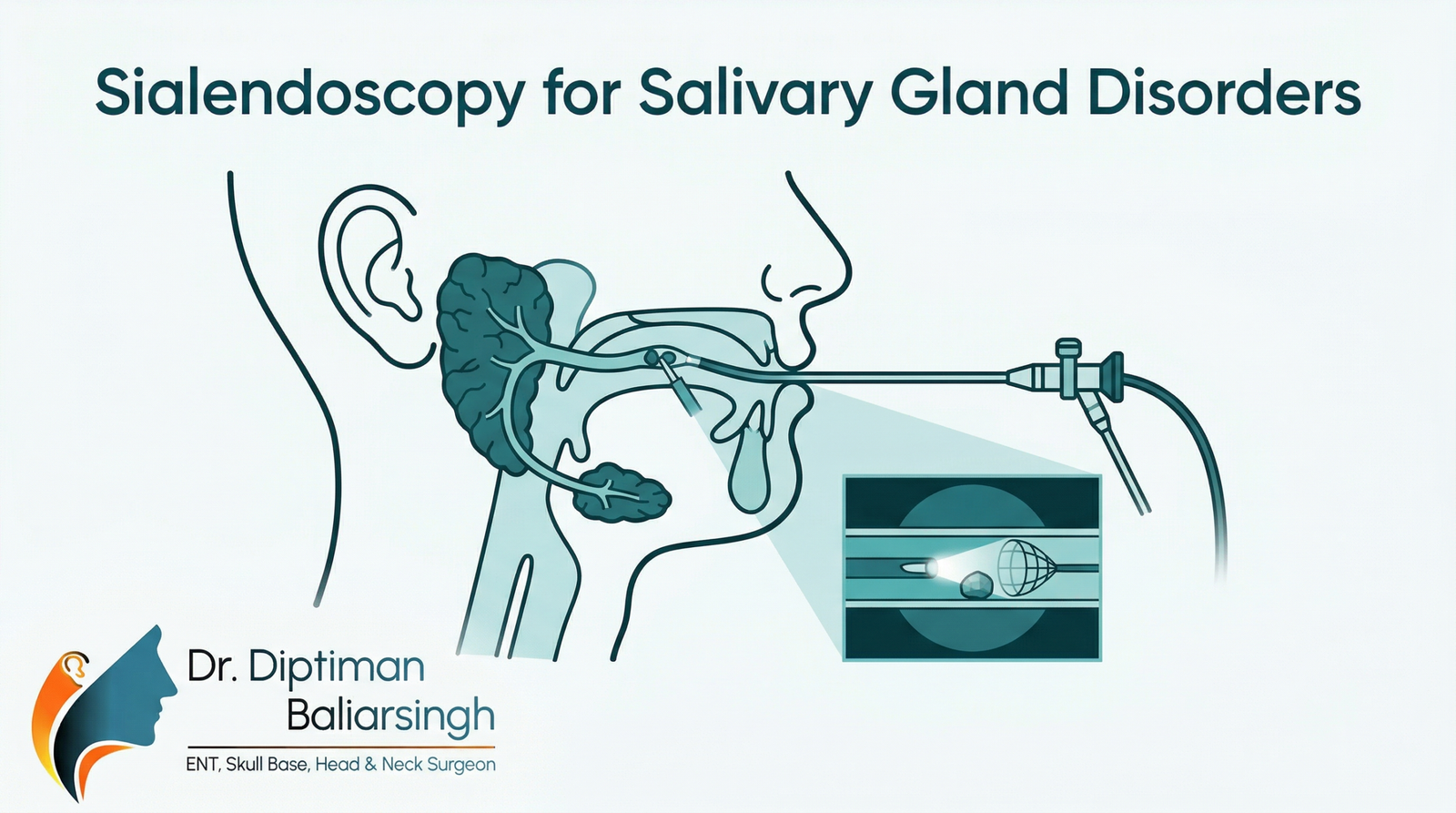
Sialendoscopy is a modern, minimally invasive procedure used to diagnose and treat disorders of the salivary glands. It involves the use of a very thin endoscope that is inserted into the salivary duct, allowing direct visualization of the ductal system.
This technique has transformed the management of salivary gland conditions by enabling treatment without the need for open surgery, preserving the gland and reducing recovery time.
Sialendoscopy is commonly used to manage conditions that affect the salivary ducts and glands, including:
These conditions often cause pain and swelling, especially during eating, and can significantly affect comfort and daily life.
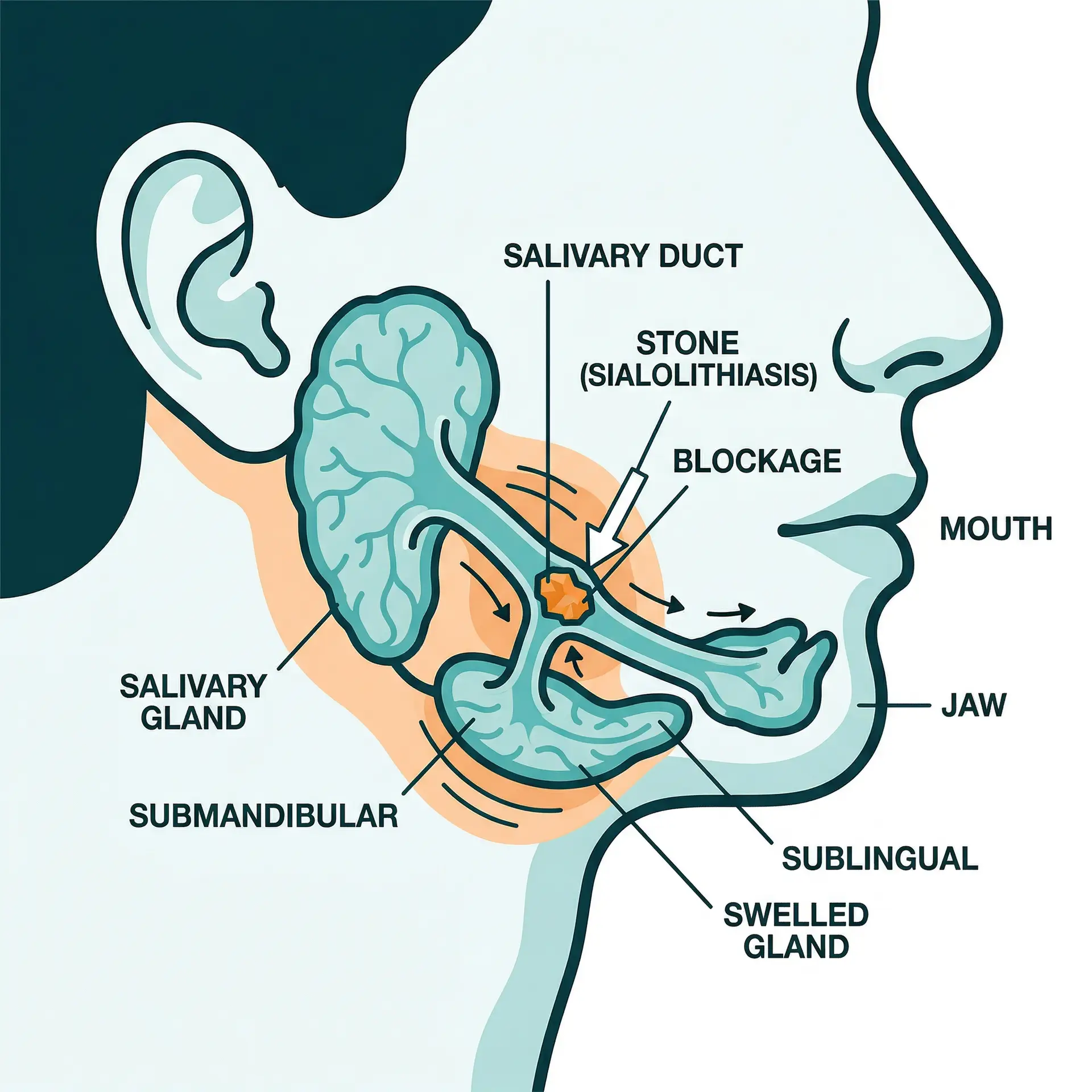
Discomfort or swelling around the jaw or under the tongue, often linked to salivary gland blockage.
Recurrent swelling that worsens while eating due to increased saliva flow.
Decreased saliva production leading to dryness and difficulty in chewing or swallowing.
Sensitivity or pain when touching the affected salivary gland region.
Signs of infection such as redness, swelling, or pus coming from the gland duct.
Formation of small stones in the duct that obstruct normal saliva flow.
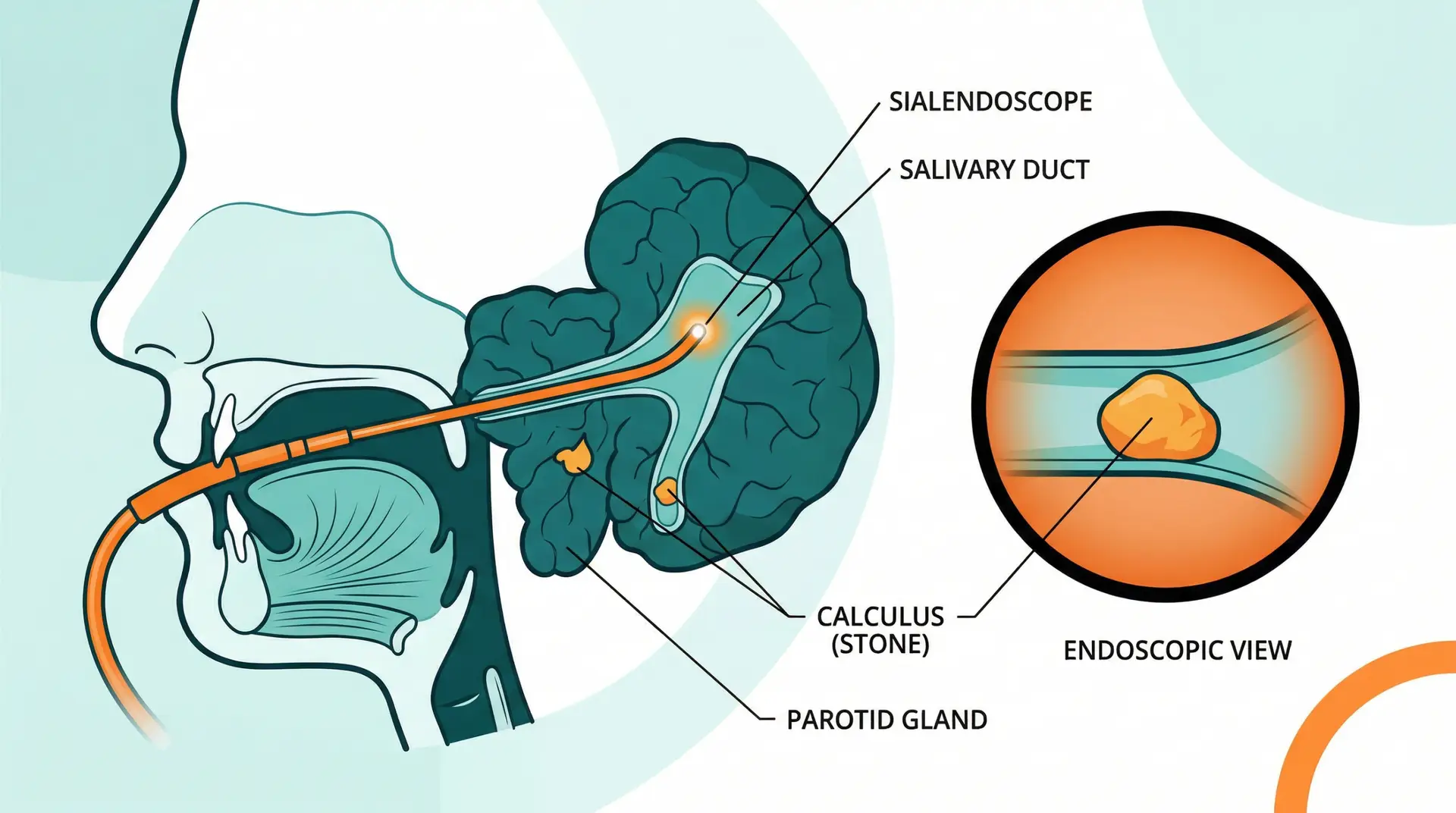
Sialendoscopy is performed using a fine, flexible endoscope that is gently introduced into the natural opening of the salivary duct. This allows the surgeon to directly visualize the internal ductal system and identify any obstruction such as stones or narrowing. Specialized micro-instruments can be used through the endoscope to remove stones, dilate strictures, or flush out debris.
The procedure is typically performed under local or general anesthesia, depending on the case, and does not require external incisions.
Recovery after sialendoscopy is usually quick, with most patients resuming normal activities within a short period. Mild swelling or discomfort may be experienced initially, which typically resolves with simple medications. Patients are often advised to stay hydrated, maintain oral hygiene, and gently massage the gland to promote saliva flow.
Follow-up visits help ensure proper healing and monitor for any recurrence.

Sialendoscopy represents a significant advancement in ENT care by offering effective treatment with minimal disruption to normal anatomy. It reduces the need for gland removal and allows patients to return to their routine quickly.
With accurate diagnosis and targeted intervention, patients can achieve long-term relief from symptoms and improved quality of life.
The procedure is generally well-tolerated and involves:
Sialendoscopy is a minimally invasive procedure used to diagnose and treat salivary gland disorders such as:
Patients with salivary gland disorders commonly experience:
Sialendoscopy is a minimally invasive procedure performed using an endoscope that:
The procedure involves inserting a thin endoscope into the salivary duct to:
Recovery after sialendoscopy is usually quick and comfortable, with:
Yes, recurrence is possible but can be minimized with:
Not all conditions require surgery and may be managed with: