
- +91 7381040775 / +91 7381030775
- support@drdiptimanent.com
- Mon - Sun : 10AM- 4PM
- Mon - Fri : 6PM-8PM
- JCEM Diagnostics, Tarini Lane, Near Secondary Board High School, Bajrakabati Rd, Cuttack, Odisha – 753001
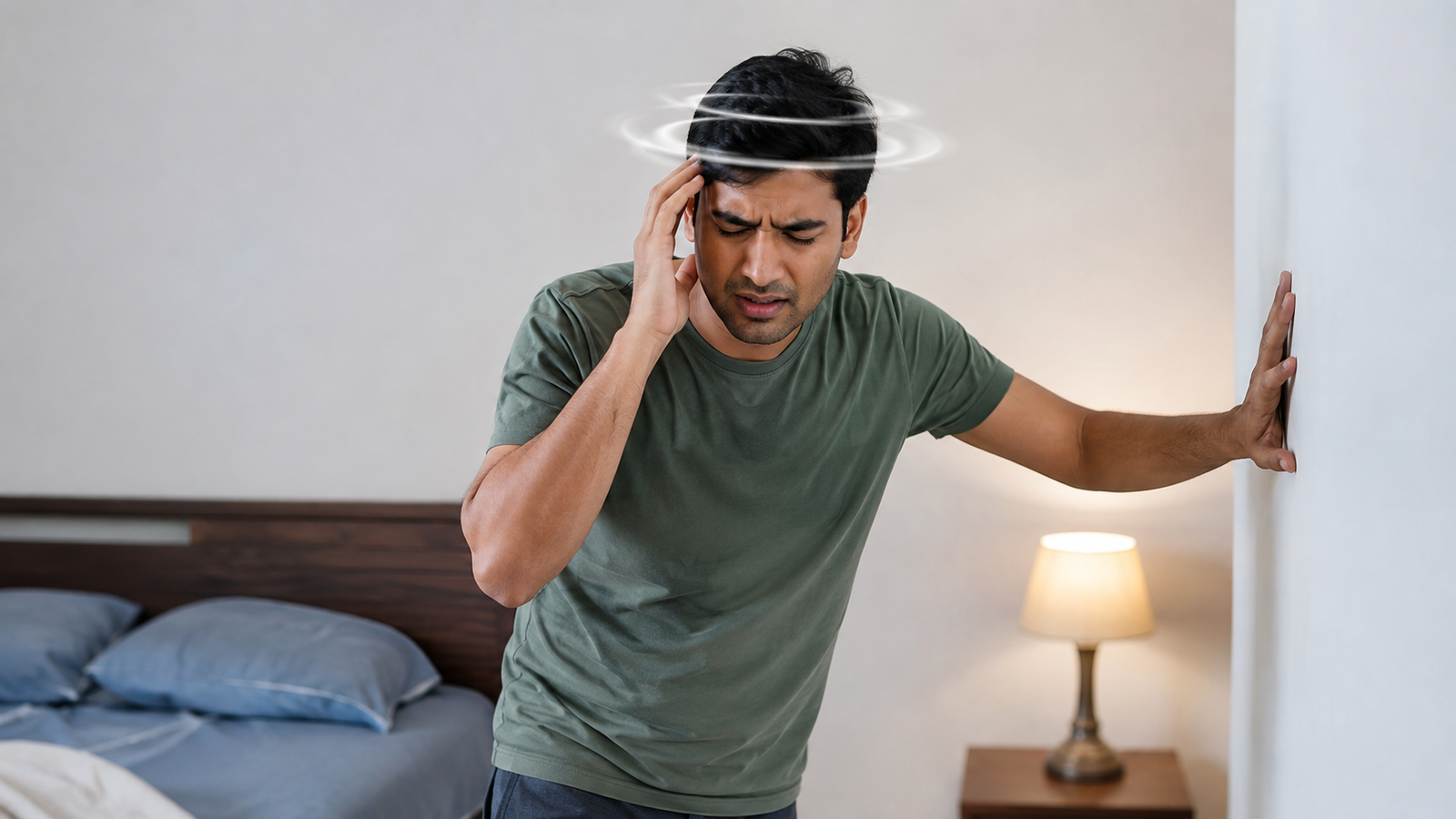
Have you ever stood up quickly and suddenly felt dizzy for a few seconds? Or perhaps the room seems to spin when you turn over in bed, look up, or bend down?
These two situations can feel similar, but they may have different causes. Dizziness after standing up quickly may sometimes be related to a temporary drop in blood pressure, while dizziness triggered by changing the position of your head may be caused by an inner ear condition such as benign paroxysmal positional vertigo (BPPV).
Therefore, understanding exactly when your dizziness happens can provide an important clue about the possible cause.
Not always.
People use the word “dizziness” to describe several different sensations. For example, you may feel:
Vertigo usually refers to a false sensation of movement, often described as spinning. Therefore, if your dizziness feels like the room is moving or spinning around you, it may be different from simply feeling lightheaded.
When you stand up, your body normally adjusts your blood pressure to maintain blood flow to the brain.
However, sometimes blood pressure can temporarily drop when you move from sitting or lying down to a standing position. This can cause lightheadedness, dizziness, weakness, blurred vision, or even fainting.
This is sometimes called orthostatic or postural hypotension.
The dizziness often improves after a short time as your body adjusts. However, frequent episodes should be evaluated, especially if you faint or have other concerning symptoms.
If your dizziness is triggered specifically by turning over in bed, lying down, getting out of bed, looking upward, or bending down, one possible cause is BPPV.
BPPV is a common inner ear condition that causes brief episodes of vertigo when the head changes position.
The inner ear contains tiny calcium crystals that help your body sense movement and balance. In BPPV, these particles move into an area where they can interfere with normal balance signals.
As a result, certain head movements can suddenly trigger a spinning sensation.
BPPV often causes brief but intense episodes of vertigo.
You may notice symptoms when you:
Other symptoms can include:
The episodes are often brief and are usually triggered by a particular head movement.
Yes.
Your inner ear plays an important role in maintaining balance. It sends information to your brain about the position and movement of your head.
When the balance system inside the inner ear is affected, the brain may receive confusing or incorrect signals. Consequently, you may experience vertigo, unsteadiness, nausea, or a sensation of movement.
However, not every type of dizziness is caused by an ear problem. Blood pressure changes, certain medicines, dehydration, migraine, neurological conditions, and other health problems can also cause dizziness.
Yes, it can.
If your body does not have enough fluids, your blood volume and circulation may be affected. As a result, some people may feel lightheaded, weak, or dizzy, particularly when standing up.
However, repeated dizziness should not automatically be blamed on dehydration. If the problem keeps happening, the underlying cause should be identified.
Yes.
A temporary or ongoing drop in blood pressure can reduce blood flow to the brain and cause symptoms such as:
If these symptoms occur repeatedly, particularly if you faint, medical evaluation is important.
The trigger can often provide a useful clue.
With dizziness related to standing up quickly, the sensation may occur when moving from sitting or lying down to standing. It often feels more like lightheadedness or faintness.
With BPPV, the dizziness is usually triggered by a change in head position and often feels like spinning.
For example:
However, these are only general patterns. A proper medical assessment is needed to determine the actual cause.
If you feel dizzy, stop moving and sit or lie down safely to reduce the risk of falling.
You should avoid:
If the dizziness is mild and brief, notice what triggered it and whether it keeps returning. This information can help your doctor identify the cause.
Yes. BPPV can often be treated with specific repositioning manoeuvres designed to move the displaced particles within the inner ear.
The most appropriate manoeuvre depends on the affected part of the balance system. Therefore, it is important to have the condition properly assessed before attempting treatment.
An ENT specialist or another trained healthcare professional can determine whether BPPV is causing your symptoms and recommend the appropriate treatment.
You should consider consulting an ENT specialist if you have:
An ENT specialist can assess whether your dizziness may be related to the inner ear and recommend the appropriate treatment.
Seek urgent medical care if dizziness or vertigo occurs with symptoms such as:
These symptoms may indicate a serious condition and should not be treated as an ordinary ear problem.
Feeling dizzy after getting up suddenly or experiencing a spinning sensation when turning in bed can have different causes.
If you mainly feel lightheaded when standing up, a temporary drop in blood pressure, dehydration, or another circulation-related problem may need to be considered. On the other hand, if the room spins when you turn your head or change position in bed, an inner ear condition such as BPPV may be responsible.
Therefore, do not ignore repeated dizziness or simply assume that every episode has the same cause. Identifying the trigger and getting the right evaluation can make all the difference.
If you experience repeated vertigo, balance problems, or dizziness associated with ear symptoms, consult an experienced ENT specialist for a proper assessment and treatment.
If you are experiencing voice changes, hoarseness, or throat discomfort, it is important not to ignore the symptoms. Proper diagnosis and timely treatment can help protect your voice and improve your quality of life.
Dr. Diptiman – ENT Specialist
📍Clinic: JCEM Diagnostics, Tarini Lane, Near Secondary Board High School, Bajrakabati Rd, Cuttack, Odisha – 753001
📞 Call: 9438436775
📧 Email: support@drdiptimanent.com
🌐 Website: Dr. Diptiman ENT
