
- +91 94384 36775
- support@drdiptimanent.com
- Monday - Sunday : 9AM- 4PM
- Monday - Saturday : 6PM-8PM, Thursday Closed
- JCEM Diagnostics, Tarini Lane, Near Secondary Board High School, Bajrakabati Rd, Cuttack, Odisha – 753001

Chronic Sinus Inflammation can cause persistent nasal blockage, facial pressure, headaches, and other uncomfortable symptoms. Although serious problems are rare, understanding Chronic Sinusitis Complications is important. Concerns about a Sinus Infection Brain connection often arise when infection spreads beyond the sinuses, potentially leading to Brain Complications of Sinusitis in cases of a Severe Sinus Infection. Rare intracranial complications of sinusitis are medically documented and can require urgent specialist care.
Chronic Sinus Inflammation may continue for weeks or months, affecting daily comfort and overall well-being. If Chronic Sinus Inflammation becomes severe or persistent, timely evaluation by an ENT specialist can help identify complications and guide appropriate treatment.
A blocked nose, facial pressure, or recurring headache may seem like common sinus problems. However, what happens when sinus inflammation continues for weeks or repeatedly returns?
Most sinus problems do not affect the brain. In fact, serious complications are rare. Still, the sinuses are located close to the eyes, skull base, and brain.
Therefore, in rare situations, a severe sinus infection may spread beyond the sinus cavities and cause dangerous complications.
Understanding these risks can help you recognise warning signs and seek medical care at the right time.
Chronic sinus inflammation occurs when the tissues lining the sinuses remain swollen for a prolonged period.
The sinuses are air-filled spaces located around the nose, cheeks, forehead, and eyes.
When these spaces become inflamed, normal mucus drainage may be affected.
Common symptoms include:
Although these symptoms are usually not dangerous, persistent or worsening problems may require an ENT evaluation.
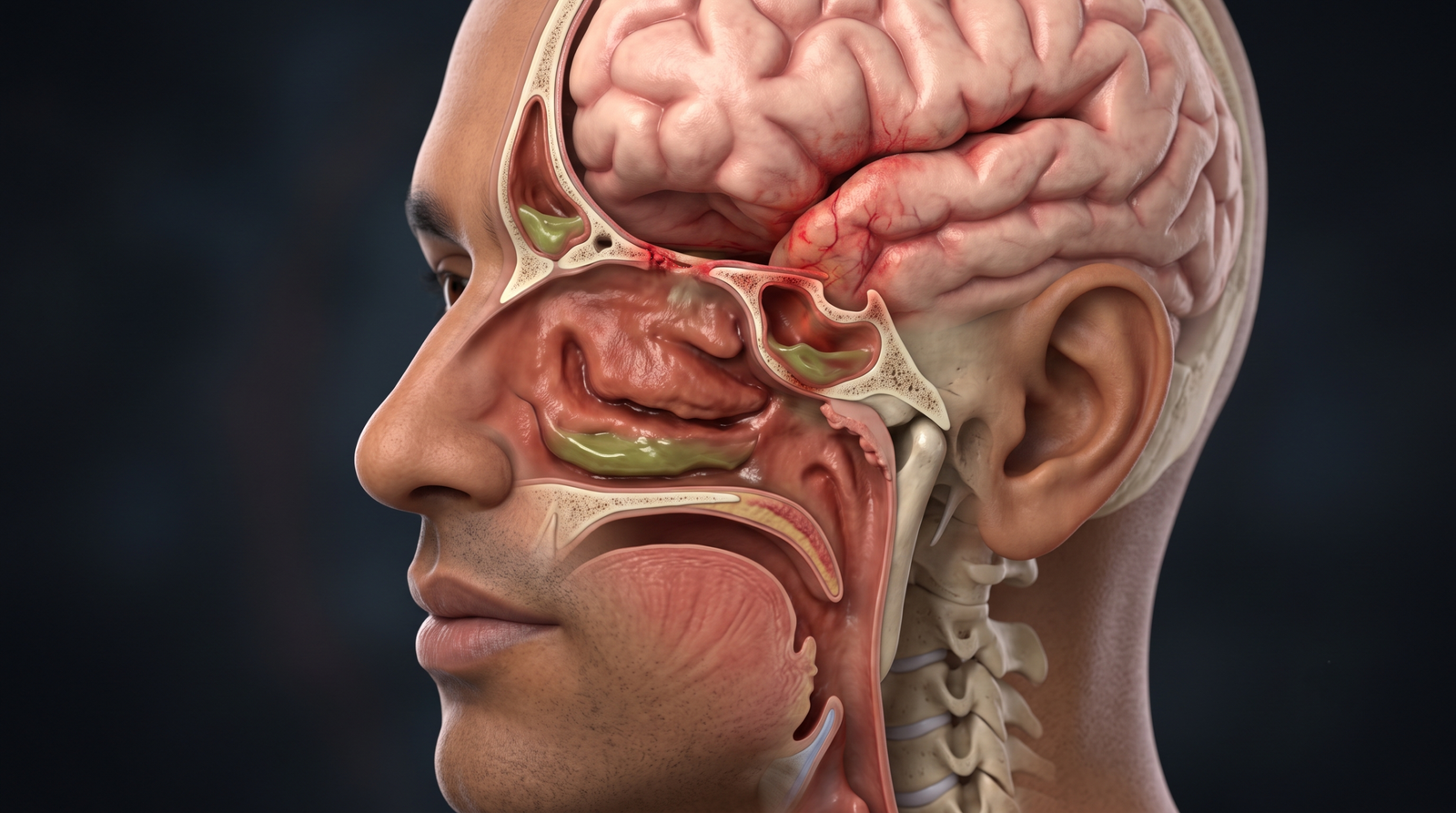
Some sinus cavities are separated from the brain and eye structures by thin areas of bone.
The frontal sinuses are located near the forehead, while the ethmoid and sphenoid sinuses are positioned deeper within the skull.
Because of this close anatomical relationship, a severe infection may rarely spread into nearby structures.
However, this does not mean that every sinus infection can reach the brain.
Brain-related complications remain uncommon.
Simple sinus inflammation usually does not directly damage the brain.
However, a severe bacterial infection can occasionally spread beyond the sinus walls.
If infection reaches tissues around the brain, serious complications may develop.
Therefore, the main concern is not ordinary nasal congestion. Instead, doctors are concerned about severe or spreading infections that produce unusual warning signs.
A severe sinus infection may spread through nearby bone or blood vessels.
In some cases, infection can move from the sinus cavity into surrounding tissues.
Possible routes of spread include:
As a result, complications may develop rapidly and require urgent hospital treatment.
Meningitis is inflammation of the protective tissues surrounding the brain and spinal cord.
Rarely, infection from nearby structures, including the sinuses, may contribute to infection around the brain.
Possible warning signs include:
These symptoms require immediate medical attention.
Yes, but this complication is rare.
A brain abscess is a collection of infected material within the brain tissue.
Sinusitis is one possible nearby source of infection that can occasionally contribute to a brain abscess.
Symptoms may include severe headache, fever, vomiting, confusion, seizures, or neurological changes.
Because a brain abscess can be life-threatening, urgent hospital treatment is necessary.
Cavernous sinus thrombosis is another rare but serious complication associated with infections around the face and sinuses.
It occurs when a blood clot develops within the cavernous sinus, a large vein located near the base of the brain.
Possible symptoms include:
Because the condition can progress quickly, immediate medical care is essential.
Yes. In some cases, infection may spread toward the tissues around the eye.
This can lead to orbital cellulitis or an abscess around the eye.
Warning signs may include:
Eye symptoms associated with a severe sinus infection should never be ignored.
Most sinus symptoms improve with appropriate care.
However, certain symptoms may indicate a more serious problem.
Seek urgent medical attention if you experience:
These symptoms are not typical of an ordinary sinus infection.
Having chronic sinusitis does not automatically mean that you are at high risk of brain complications.
Serious intracranial complications are uncommon.
However, persistent inflammation, repeated infections, or severe untreated infection may require careful medical evaluation.
Therefore, patients with ongoing sinus symptoms should avoid repeatedly self-treating the problem without understanding the underlying cause.
First, an ENT specialist will review your symptoms and medical history.
The nose and sinus drainage pathways may be examined using nasal endoscopy.
Depending on the symptoms, additional investigations may include:
These tests can help doctors identify severe inflammation, blocked sinuses, or possible spread to nearby structures.
Treatment depends on the type and severity of the complication.
Serious infections may require hospital admission and intravenous antibiotics.
In some situations, urgent sinus surgery may be necessary to drain infected material and restore sinus drainage.
Additionally, brain, eye, or neurological complications may require treatment from a multidisciplinary medical team.
Therefore, early diagnosis is extremely important.
Proper diagnosis and treatment can help control ongoing sinus disease.
Patients should seek medical advice when sinus symptoms persist, frequently return, or become unusually severe.
Furthermore, following the prescribed treatment plan may help control inflammation and infection.
Avoid using antibiotics without medical advice because not every sinus problem is caused by bacteria.
You should consider an ENT evaluation if you experience:
However, severe headache, eye swelling, vision changes, confusion, neck stiffness, seizures, or neurological symptoms require urgent medical attention.
In most cases, chronic sinus inflammation does not affect the brain.
However, rare and severe sinus infections can spread beyond the sinuses and lead to serious complications involving the tissues around the brain, blood vessels, or brain itself.
Fortunately, these complications are uncommon.
Still, unusual or rapidly worsening symptoms should never be ignored.
Early ENT evaluation, proper diagnosis, and timely treatment can help identify serious sinus problems before complications become more difficult to manage.
If you are experiencing voice changes, hoarseness, or throat discomfort, it is important not to ignore the symptoms. Proper diagnosis and timely treatment can help protect your voice and improve your quality of life.
Dr. Diptiman – ENT Specialist
📍Clinic: JCEM Diagnostics, Tarini Lane, Near Secondary Board High School, Bajrakabati Rd, Cuttack, Odisha – 753001
📞 Call: 9438436775
📧 Email: support@drdiptimanent.com
🌐 Website: www.drdiptimanent.com
