
- +91 7381040775 / +91 7381030775
- support@drdiptimanent.com
- Mon - Sun : 10AM- 4PM
- Mon - Fri : 6PM-8PM
- JCEM Diagnostics, Tarini Lane, Near Secondary Board High School, Bajrakabati Rd, Cuttack, Odisha – 753001
Microscopic ear surgery is an advanced ENT procedure used to treat delicate ear conditions with greater precision and safety. It is commonly recommended for chronic ear infection, persistent ear discharge, damaged eardrums, and hearing-related problems. Using high-powered microscopes, surgeons can perform accurate eardrum repair and specialized procedures like mastoid surgery while protecting the sensitive structures inside the ear. Modern microscopic techniques help improve hearing outcomes and reduce complications during surgery.
Modern microscopic ear surgery helps treat chronic ear infection, persistent ear discharge, and hearing problems affecting daily life. Advanced eardrum repair techniques and precise mastoid surgery procedures improve hearing and reduce long-term complications. In many cases, microscopic ear surgery provides effective treatment for severe ear infection and continuous ear discharge that do not improve with medicines alone. Better surgical methods for eardrum repair and modern mastoid surgery continue to improve recovery and hearing outcomes for patients with chronic ear disease.
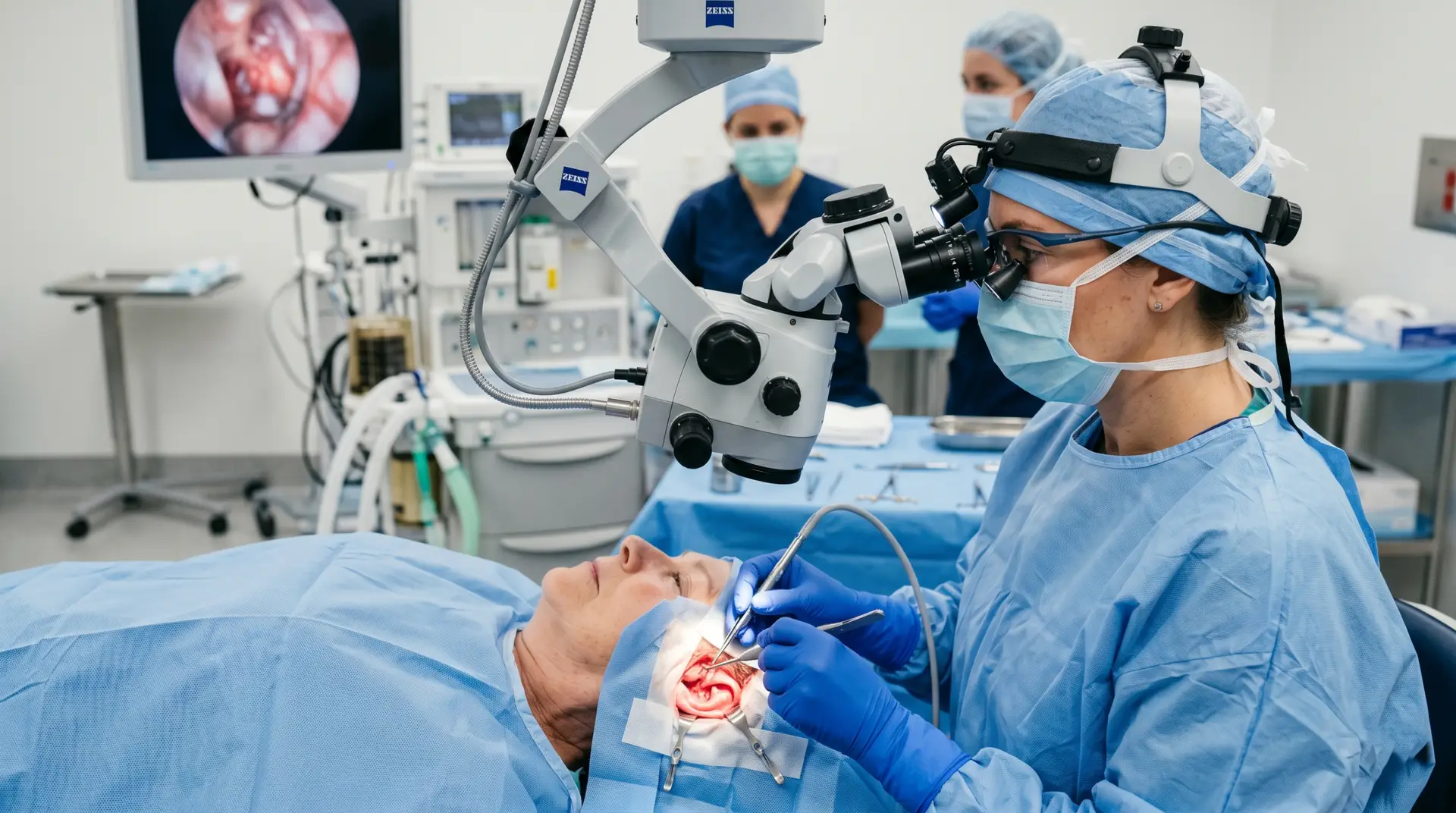
Microscopic ear surgery is a specialized ENT procedure performed using a high-powered surgical microscope. This microscope allows the surgeon to view the delicate structures inside the ear with much greater clarity and precision.
Because the ear contains extremely small and sensitive structures, microscopic techniques help improve surgical accuracy while reducing damage to surrounding tissues.
This type of surgery is commonly used to treat chronic ear infections, damaged eardrums, hearing problems, and certain inner or middle ear conditions.
The ear is made up of tiny bones, nerves, and delicate tissues that play an important role in hearing and balance. In many cases, medicines alone may not fully treat certain ear conditions.
As a result, surgery may become necessary to:
Microscopic techniques help the surgeon operate with better visibility and control.
ENT specialists may recommend microscopic ear surgery for several ear-related conditions.
These include:
In some cases, surgery is also advised when repeated infections start affecting hearing ability.
Different surgical procedures may be performed depending on the underlying problem.
Common types include:
The exact procedure depends on the patient’s condition, symptoms, and hearing status.
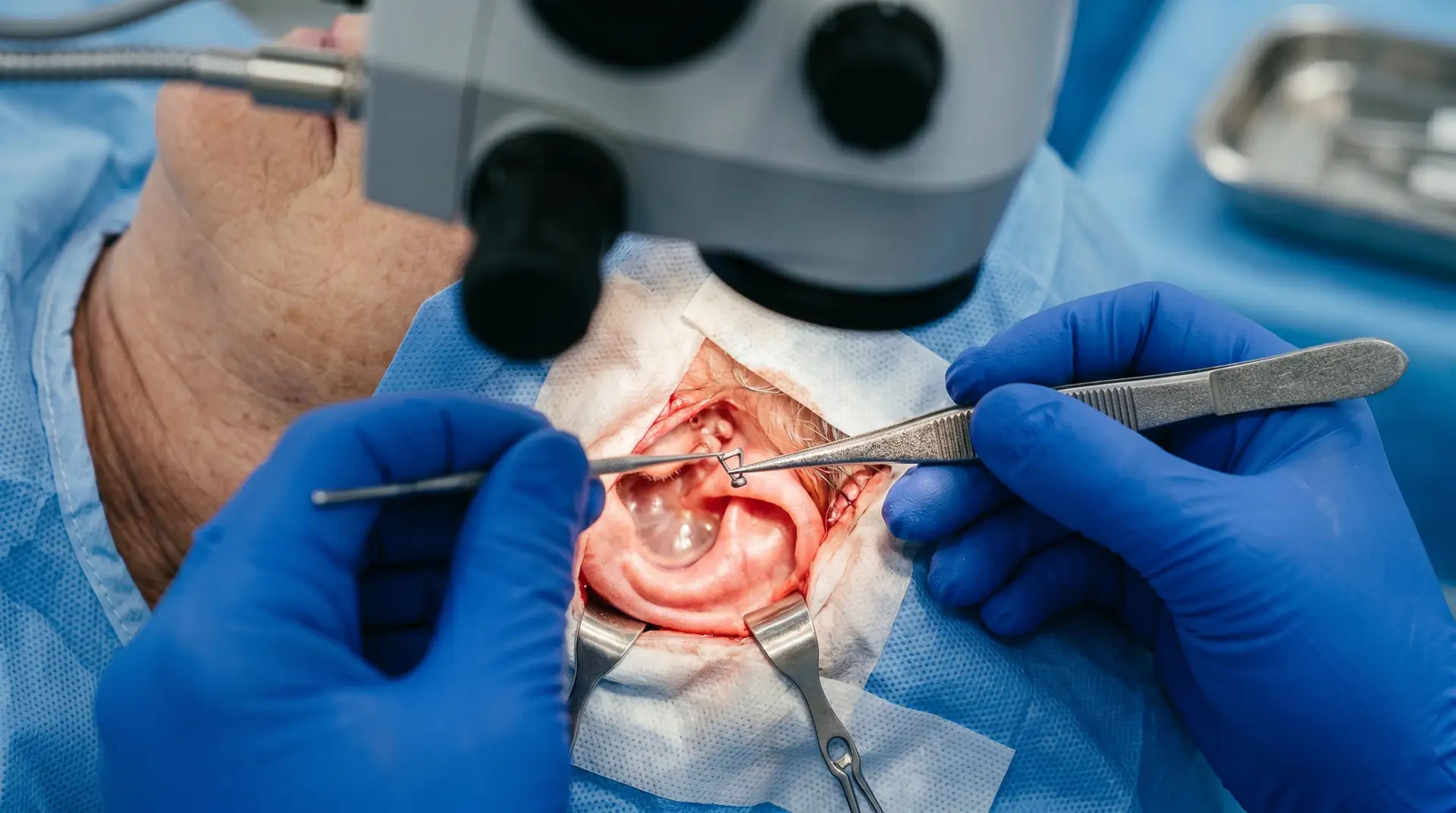
The surgery is usually performed under local or general anesthesia, depending on the procedure and patient’s age.
During the surgery:
Because of the magnified view, the surgeon can work more accurately inside the narrow ear canal and middle ear space.
Many procedures are minimally invasive and may not require large external cuts.
Microscopic techniques offer several advantages compared to traditional surgical approaches.
Benefits may include:
In addition, microscopic surgery often helps preserve healthy ear tissues while treating the affected area.
Recovery time varies depending on the type of surgery performed. However, many patients can return to normal daily activities within a few days to weeks.
During recovery, patients are usually advised to:
Some temporary fullness, mild discomfort, or hearing changes may occur during healing.
You should seek ENT evaluation if you experience:
Early treatment can help prevent complications and protect long-term hearing health.
Microscopic ear surgery is generally considered safe when performed by an experienced ENT specialist. Modern surgical techniques and improved imaging have made these procedures more precise and effective.
However, like any surgery, risks may vary depending on the condition being treated. Your ENT specialist will explain the procedure, expected outcomes, and recovery process before surgery.
If you are experiencing voice changes, hoarseness, or throat discomfort, it is important not to ignore the symptoms. Proper diagnosis and timely treatment can help protect your voice and improve your quality of life.
Dr. Diptiman – ENT Specialist
📍Clinic: JCEM Diagnostics, Tarini Lane, Near Secondary Board High School, Bajrakabati Rd, Cuttack, Odisha – 753001
📞 Call: 9438436775
📧 Email: support@drdiptimanent.com
🌐 Website: Dr. Diptiman ENT
